Why winter is the wrong time to ignore roof wear
Ontario winters put every weak spot under pressure. Snow load, freeze-thaw cycles, and wind across open neighbourhoods find the soft spots first. If your roof is already tired, waiting until spring often means dealing with leaks in January.
We walk roofs across the GTA every week. The homes that struggle most in deep winter usually showed the same warning signs months earlier. Catching them early gives you time to plan a proper replacement instead of an emergency tarp.
1. Shingles that curl, crack, or lift
Healthy asphalt shingles lie flat and hold their shape. When edges curl up or the surface looks brittle, the protective outer layer is breaking down. Wind can then lift tabs and drive water underneath.
A few damaged shingles can be repaired. Widespread curling across multiple slopes usually means the roof is near the end of its service life.
2. Granule loss in the gutters
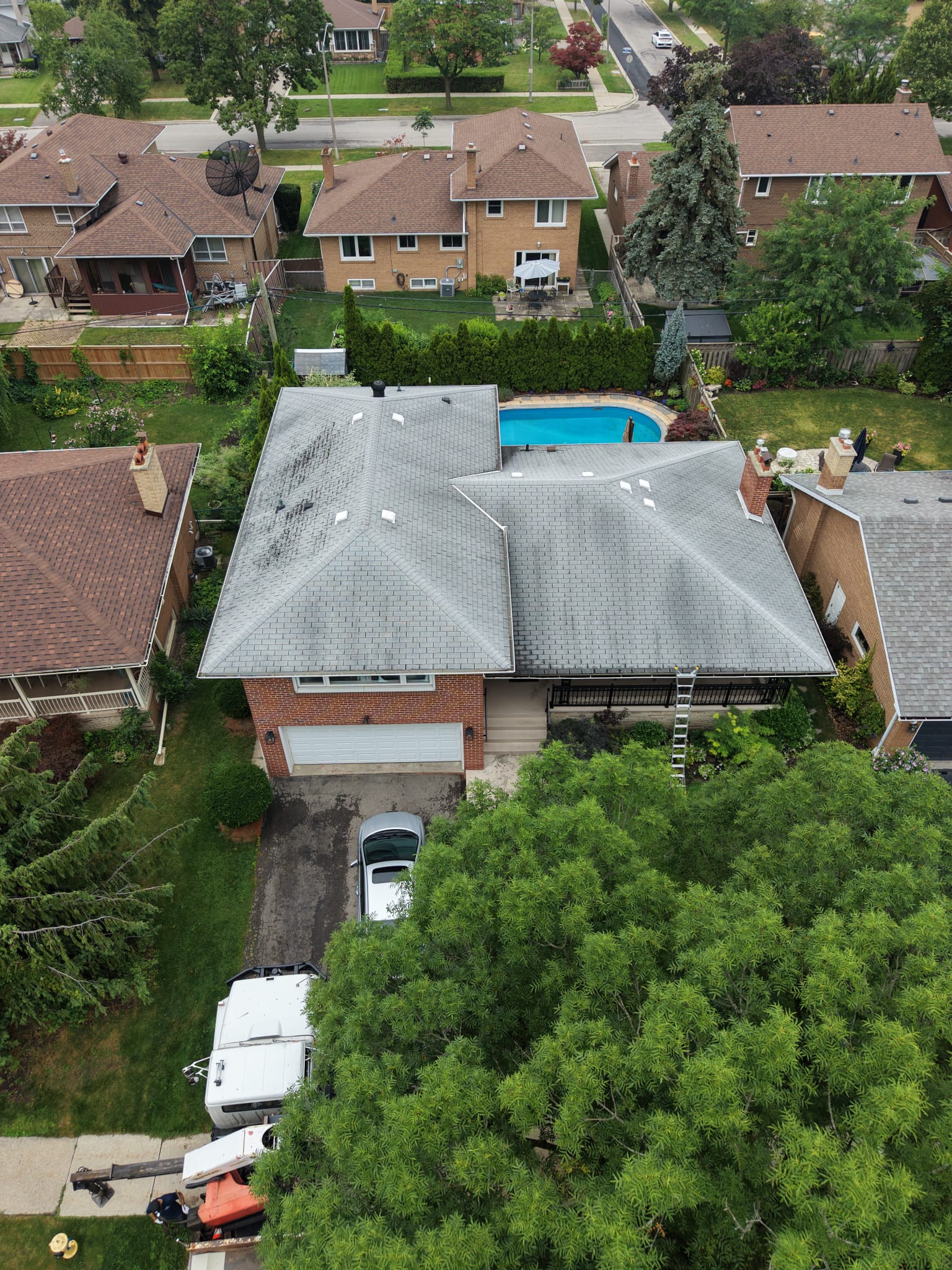
Asphalt shingles shed granules as they age. A light dusting after a storm is normal. Thick piles of grit in the eavestroughs, or bald patches on the shingles themselves, mean the surface is wearing through.
Once the mat is exposed, UV and weather eat through the roof faster. That is a common trigger for full replacement on homes built in the 1990s and early 2000s.
3. Water stains on ceilings or in the attic
Brown rings on drywall, damp insulation, or musty attic air are not cosmetic issues. Water is getting past the roof deck somehow. It may be a flashing detail, a valley, or worn shingles.
Do not wait for a bigger stain. A short inspection often finds the entry point before framing and insulation take lasting damage.
4. Sagging or soft spots on the deck
Look along the roof plane from the street or yard. A sag between rafters, or a soft feel underfoot during a professional inspection, points to decking that has been wet for a long time.
Soft decking is not a patch job. It usually means tear-off, new sheathing, and a full new roof system.
5. Your roof is past its expected lifespan
Standard asphalt often lasts 15 to 20 years in our climate. Architectural shingles can go longer when installed well and kept clear of ice dams. If you bought the home with an older roof and have no service records, assume you are on borrowed time.
Keen Roofing offers a free on-site inspection with photos. We will tell you honestly whether repair still makes sense or whether replacement is the smarter spend before the next heavy snow.